
Drumline Resources:
Explore a collection of drumline resources designed for students, instructors, and marching percussion programs. Browse warmups, exercises, cadences, rehearsal systems, field timing tools, and instructional guides built for real-world marching band performance. Whether you are developing fundamentals, refining ensemble technique, or looking for practical rehearsal tools, these drumline resources bring together focused, usable content from across the site in one organized place.
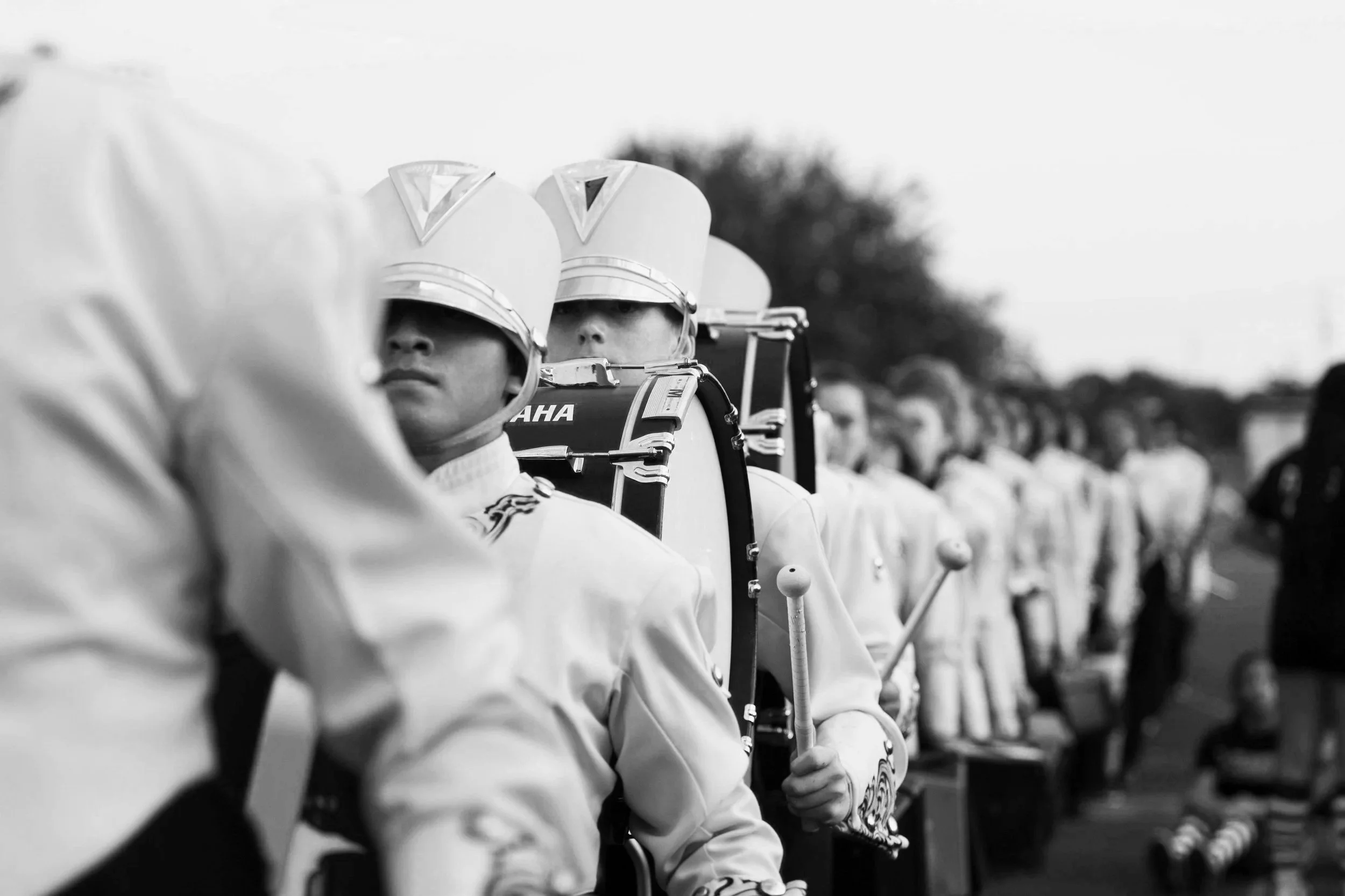
This Drumline Resources Hub is a collection of tools, guides, and instructional materials for marching percussion students, educators, and program directors. This hub brings together warmups, exercises, cadences, rehearsal systems, and field-based training resources designed to support real-world drumline performance. Whether you are building fundamentals or refining ensemble execution, these resources are organized to help improve timing, technique, and overall musical clarity.
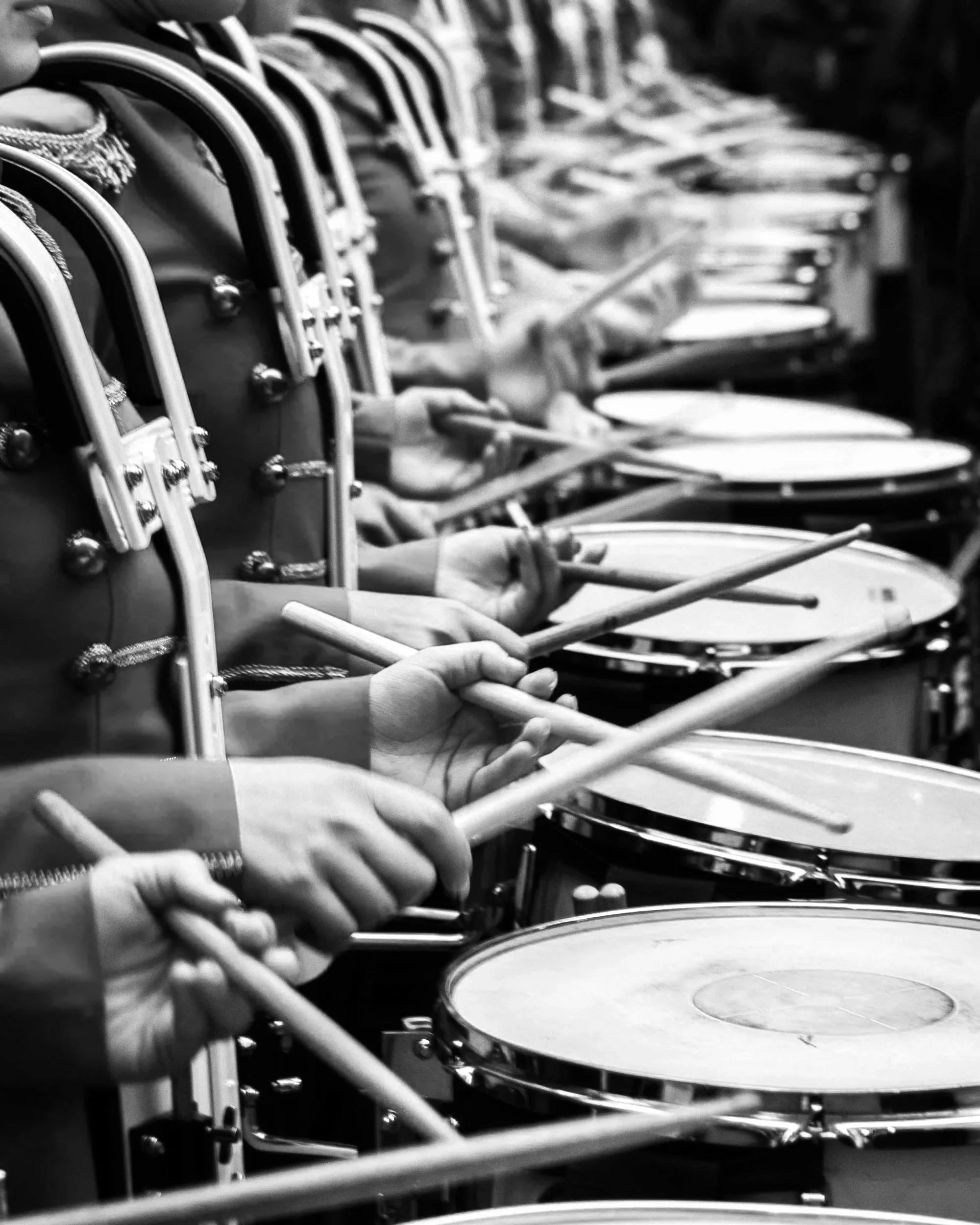
Warmups and Exercises:
Rehearsal and Teaching:
Marching Tools:
Music and Downloads:
Warmups and Technical Development
Drumline warmups and technical exercises are designed to help marching percussionists build consistency, control, accuracy, and ensemble alignment. These resources provide structured practice material for snare drums, tenor drums, bass drums, cymbals, and full drumline ensembles, with an emphasis on developing the fundamental skills required for clean and confident marching percussion performance.
A strong drumline foundation begins with consistent technique. Warmups and technical exercises can help students develop controlled stick heights, accurate note placement, consistent sound quality, proper articulation, and reliable execution of basic rudiments. These skills become increasingly important as music becomes faster, more complex, and more demanding in a competitive marching environment.
Timing accuracy is another major focus of drumline training. Marching percussionists must be able to maintain a steady internal pulse while matching the timing of the rest of the ensemble. Exercises that emphasize subdivisions, rhythmic clarity, tempo consistency, and coordinated attacks can help students understand how individual timing affects the sound of the entire section.
Rudimental clarity is also essential for developing a clean drumline sound. Repeated practice of rolls, diddles, flams, accents, paradiddles, and other common rudiments can help students develop control and consistency before applying those techniques to more advanced marching percussion music. Technical exercises can be performed slowly at first and gradually increased in tempo as accuracy and control improve.
Section cohesion is particularly important in a drumline because multiple performers must execute their parts together with a unified approach. Differences in stick height, articulation, spacing, timing, or dynamic interpretation can make an ensemble sound inconsistent even when every performer is technically playing the correct notes. Daily warmups give instructors an opportunity to address these details and establish common performance standards across the section.
These materials are intended for regular use during drumline rehearsals, percussion sectionals, marching band camps, and individual practice. A consistent warmup routine can help establish repeatable performance habits while giving students time to prepare their hands, reinforce technical concepts, and focus their attention before working on show music or other ensemble material.
Whether you are building a beginner drumline, preparing an experienced competitive percussion ensemble, or looking for supplemental marching percussion exercises, these drumline warmups and technical resources can provide a structured foundation for daily training. Consistent practice can help improve timing, technique, rudimental execution, sound quality, section cohesion, and overall ensemble precision.
Cadences and Performance Material
Drumline cadences provide performance-focused material that connects technical rehearsal and practice to live marching percussion performance. These resources give snare drums, tenor drums, bass drums, and cymbals an opportunity to apply the timing, technique, coordination, and ensemble skills developed during warmups and technical exercises in a more musical and performance-oriented setting.
A strong cadence combines rhythmic interest with consistent groove, clear ensemble timing, and an effective overall sound. Unlike isolated technical exercises, cadences require performers to maintain accuracy while also thinking about musical phrasing, dynamics, articulation, and performance energy. This makes them a useful bridge between practicing individual skills and performing as a complete drumline.
Timing consistency is especially important when performing cadences in a marching environment. Each section must lock together while maintaining a steady pulse and clear subdivision. Snare and tenor parts need to align with bass drum rhythms, while the entire percussion ensemble must maintain a unified sense of time. Regular cadence practice can help students develop the listening skills and rhythmic awareness necessary to perform confidently as part of a larger ensemble.
Cadences can also help develop performance endurance and consistency. Repeated passages, demanding sticking patterns, accented figures, and extended grooves require performers to maintain control over longer periods of playing. Practicing these materials at appropriate tempos can help students build the physical and mental stamina needed for rehearsals, parades, pep rallies, competitions, and other live performances.
For instructors and directors, drumline cadences can provide versatile material for rehearsals and performance opportunities. They can be used during marching band events, drumline showcases, school performances, competitions, pep rallies, parades, or other situations where the percussion section is featured. Cadences can also give students a motivating way to apply technical concepts they have been practicing throughout the season.
The goal of these resources is to help percussionists move beyond simply playing exercises and begin applying those skills in a complete musical context. By combining groove, timing, technical execution, dynamics, and ensemble coordination, cadences can help students develop the confidence and consistency required for live performance.
Whether you are looking for a drumline cadence for rehearsal, a performance piece for a marching percussion ensemble, or supplemental material for developing student musicians, these resources provide practical opportunities to turn technical skills into clean, confident, and engaging performance execution.
Rehearsal Systems and Teaching Tools
Effective drumline performance depends on structured rehearsal systems, clear instructional frameworks, and consistent expectations for student musicians. These resources are designed to support drumline directors, percussion instructors, band directors, and educators in organizing rehearsals, communicating technical concepts, and developing a cohesive marching percussion ensemble throughout an entire season.
A successful drumline rehearsal involves much more than simply learning music. Students need to understand proper technique, timing, sound quality, dynamics, musical interpretation, and ensemble responsibilities. A structured rehearsal system can help instructors introduce these concepts in a logical order while giving students clear goals for both group rehearsals and individual practice.
Consistent rehearsal workflows are particularly valuable during a marching band season. Programs often have limited rehearsal time, and instructors need to balance technical development with learning show music, marching responsibilities, ensemble coordination, and performance preparation. Organized rehearsal materials can help directors determine what to address during each rehearsal and create a progression that develops skills over time rather than relying on repetitive or unstructured practice.
Instructional frameworks can also improve student understanding. Clearly defined terminology, rehearsal procedures, technical expectations, and practice methods give students a common language for discussing percussion technique and performance. When an entire section understands what is expected, instructors can spend less time explaining basic procedures and more time addressing the musical and technical details that separate a developing drumline from a polished ensemble.
Season-long development is another important consideration. A drumline may begin the season working on fundamental technique, rudiments, timing, and basic ensemble exercises before gradually progressing toward more demanding show music and performance requirements. A structured system can help establish that progression while allowing instructors to identify weaknesses, reinforce fundamentals, and adjust the pace of instruction based on the needs of the ensemble.
These resources can also be useful for programs with students of different experience levels. New members may need additional instruction in basic marching percussion concepts, while returning members may be ready for more advanced technical and musical challenges. A well-organized rehearsal framework gives instructors a way to address both groups while maintaining a consistent approach across the entire percussion section.
Whether you are directing a school drumline, teaching private percussion students, leading a competitive marching percussion ensemble, or developing a complete rehearsal curriculum, these resources provide practical tools for organizing instruction and improving ensemble development. The goal is to make rehearsals more focused, productive, and consistent while helping students build the skills and performance habits they need throughout the marching season.
Field and Performance Tools
Marching percussion requires precise timing across distance, space, movement, and changing field positions. These resources are designed to help percussionists and educators translate musical timing into physical field performance while maintaining consistent ensemble sound, coordination, and visual alignment.
Performing on a marching field introduces challenges that are not present when playing in a stationary percussion ensemble. Members may be separated by significant distances, moving in different directions, changing formations, or performing visual responsibilities while playing. These factors can make it more difficult to hear individual performers and maintain a consistent sense of time. Developing reliable internal pulse and strong ensemble awareness is therefore an important part of marching percussion training.
Field-based timing tools can help performers understand how musical timing relates to movement and staging. Students can use these concepts to coordinate musical events with drill sets, transitions, entrances, releases, and other visual moments. When musical and visual elements are carefully aligned, the performance becomes more cohesive and easier for both performers and audiences to follow.
These tools can also support rehearsal efficiency. Directors and instructors can use structured timing exercises and field-based practice methods to identify inconsistencies that may not be obvious during an indoor or stationary rehearsal. Working through timing challenges at realistic performance distances can help students learn to rely on internal pulse, visual awareness, listening skills, and consistent technique rather than depending entirely on hearing the nearest performer.
Ensemble alignment is especially important for marching percussion. Snare drums, tenor drums, bass drums, cymbals, and other performers must maintain coordinated attacks, releases, dynamics, and rhythmic figures even when the group is spread across the field. Consistent preparation and rehearsal methods can help establish the shared timing references needed to produce a unified sound.
These resources are useful for marching band rehearsals, drumline sectionals, field training, competitive marching percussion programs, and performance preparation. They can be incorporated into daily rehearsal routines or used when preparing specific sections of a show that require particularly precise coordination between music, movement, and visual staging.
Whether you are a student percussionist learning to maintain time while marching or a director working to improve ensemble precision across the field, these marching percussion tools provide practical approaches for connecting musical timing with physical performance. The goal is to help performers maintain consistent tempo, improve spatial awareness, strengthen ensemble coordination, and produce a more precise and unified field performance.
Gear and Practical Setup
Equipment choices and setup decisions can directly affect performance quality, comfort, consistency, and the overall sound of a drumline. These resources provide practical guidance for selecting, configuring, maintaining, and using marching percussion equipment in real rehearsal and performance environments.
Choosing the right equipment involves more than simply selecting a particular drum or accessory. Drumline performers and instructors may need to consider drum size, weight, hardware, playing position, carrier systems, drum angles, stick and mallet selection, heads, tuning, cymbal setup, and other factors that can influence both performance and comfort. Small setup changes can sometimes have a noticeable effect on technique, sound production, and the ability to perform consistently.
Proper setup is particularly important in marching percussion because performers must often play while standing, marching, rotating, changing direction, and maintaining visual responsibilities. Equipment that is positioned incorrectly or adjusted inconsistently can make technique more difficult and may interfere with comfortable movement. Establishing a consistent setup across a section can also help create a more unified visual appearance and playing approach.
These resources focus on practical, real-world equipment considerations rather than treating gear selection as a one-size-fits-all decision. Different programs have different budgets, performance goals, student experience levels, and equipment needs. A competitive marching percussion ensemble may have different requirements from a school drumline, beginner program, parade ensemble, or educational percussion group.
Equipment knowledge can also help instructors make more informed purchasing and maintenance decisions. Understanding how different components affect playability and performance can make it easier to evaluate new equipment, replace worn components, standardize section setups, and determine which upgrades are actually useful for a particular program.
The resources in this section may also address practical setup questions that arise during rehearsals and performances. Consistent drum angles, carrier adjustments, playing positions, tuning approaches, and accessory choices can all contribute to a more predictable playing experience. When equipment is properly configured, students can spend more of their attention on technique, timing, musicality, and ensemble performance.
Whether you are a student percussionist learning how to properly configure your instrument, an instructor developing a drumline equipment setup, or a director evaluating gear for an entire percussion program, these resources provide practical information based on real-world marching percussion use. The goal is to help performers and educators make informed equipment choices, establish consistent setups, and create a playing environment that supports reliable performance.
Closing
These drumline resources are designed to work together as a connected learning system for marching percussion students, instructors, and directors. Rather than treating warmups, technical exercises, cadences, and rehearsal materials as completely separate resources, this collection provides a progression that helps performers develop fundamental skills, apply those skills in musical situations, and continue improving throughout an entire marching season.
Drumline warmups establish the technical foundation. They give students regular opportunities to develop stick control, timing accuracy, rudimental clarity, sound quality, dynamic control, and consistent playing technique. Daily warmup exercises can help establish common expectations across the percussion section while preparing performers for the more demanding material that follows.
Technical exercises reinforce these foundational skills through focused practice. Students can isolate specific challenges involving rudiments, subdivisions, coordination, articulation, tempo, and endurance before applying them to full musical passages. This type of structured practice can make difficult material more manageable and give instructors a practical way to address weaknesses within an ensemble.
Cadences provide the next step by applying technical skills in a performance-focused musical context. Instead of practicing an isolated exercise, performers must maintain groove, timing, dynamics, coordination, and musical energy while playing as a complete drumline. Cadences can help students develop the confidence and consistency needed to transfer rehearsal skills into live performance situations.
Rehearsal tools support the larger process of ensemble development. Marching percussion programs must continually balance individual technique, section coordination, show music, movement, field performance, and overall musical development. Organized rehearsal systems can help directors establish clear goals, maintain consistent instruction, and build skills progressively from the beginning of the season through performance.
This connected approach can also benefit students with different levels of experience. Beginning performers can use foundational exercises to establish proper technique and timing, while more experienced musicians can use the same system to refine advanced skills, improve consistency, and prepare for increasingly demanding performance material. Instructors can adapt the resources to fit the needs of individual students or the entire percussion section.
The goal is to create a practical progression from practice to rehearsal to performance. Students first develop the necessary technical skills, then apply those skills through musical exercises and cadences, and ultimately use them in full marching percussion performances. This approach helps connect everyday practice with the larger goals of ensemble precision, musicality, confidence, and performance quality.
Whether you are a student percussionist, drumline instructor, band director, or competitive marching percussion educator, this hub provides a central reference point for ongoing development. Explore the available drumline warmups, technical exercises, cadences, rehearsal systems, field performance tools, and equipment resources to build a more organized and effective approach to marching percussion training.