
Hybrid Drum Rudiment: Waldos and the Hidden Grace Note Double Stroke Roll
I know there are a million different snare drum rudiments out there, with 40 fundamental ones and who knows how many hybrids. But here is just one more, a fun and creative rudiment that hides grace notes within an open roll in a clever way. Most hybrid rudiments are a combination of several basic rudiments, but Waldos are a combination of only a few, which makes it easier to learn, though definitely hard to master.
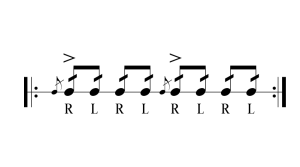
So there it is, a simple little grace note within a duple double-stroke roll, couldn’t be simpler!
This hybrid rudiment is built around a simple but deceptive concept: a grace note hidden inside a duple roll. While maintaining a standard double stroke roll, you insert a triple stroke within the flow. The result is a subtle but very noticeable shift in texture that adds complexity without completely abandoning the underlying pulse.
The defining feature of Waldos happens in the left hand. The last diddle before the accent is actually played as a triple stroke, similar in concept to an egg beater motion. This requires a high level of control, especially at slower tempos where every note is exposed. If the triple stroke is not clean, the illusion of the hidden grace note breaks down quickly.
Once that control is developed, the rudiment opens up quite a bit. You can approach it like a long roll style rudiment by starting extremely slow and gradually increasing the tempo. The goal is to maintain a clear and consistent grace note leading into every accented diddle, even as the speed increases.
If you want to push this even further, try shifting the underlying grid. Instead of thinking in straight duple eighth notes, use a triplet-based framework. This changes the feel entirely and forces a deeper level of coordination. Then take that version and build it up again using the same long roll approach. It is not easy, but that is kind of the point.
Most hybrid rudiments combine several different ideas, which can make them difficult to break down and learn. Waldos take a more focused approach. They use only a small number of components, which makes the concept relatively easy to understand, but much harder to execute cleanly. That balance between simplicity and control is what gives this rudiment its value.
If this kind of creative rudiment design interests you, there is a much larger world to explore. One standout resource is Ninja Drummist, which features over 500 hybrid snare drum rudiments and continues to grow. Each rudiment is ranked by difficulty, and many include descriptions for interpretation and execution.
They also lean into the fun side of drumming with names that are hard to forget. You can challenge your drummer friends with things like “Cheese Quickity Klotz (kicked up a notch),” “Grilled Cheese,” or “Threesomes,” and then try to back it up by actually playing them.
Have fun working through this rudiment. Take your time, stay patient with the control, and do not be surprised if it feels harder than it looks. And if you end up creating something new of your own, there is a decent chance it either already exists somewhere… or you just added one more to the list.
Then, if you want (or need) some free drumline warmups and exercises, check out DrumlineWarmups.com!
About the Author
Patrick Blakley is a percussion educator, author, adjudicator, and entrepreneur specializing in marching percussion and drumline education. He is the creator of DrumPacket.com, DrumlineWarmups.com, DrumAudit.com, DrumsetGrooves.com, and SyracuseDrums.com. His educational materials and performance audio edits through CompetitiveMusic.com are used by hundreds of schools and programs across the United States and beyond. He is the author of Quadratics: The Tenor Drum Equation, The Field Percussion User Manual, and other instructional music books. Read more about him by clicking here!
