
Buying Your First Drumset: A Beginner's Guide
What to Look for When Buying Your First Drumset
Buying your first drumset can be a little overwhelming. There are dozens of drumset brands, hundreds of different models, different numbers of drums, countless cymbals, and enough stands and hardware to make a beginner wonder where to even start. The good news is that you do not need a huge or expensive drumset to learn how to play.
For most beginning drummers, a good 4-piece or 5-piece drumset is more than enough. You can learn grooves, fills, coordination, technique, dynamics, reading, and countless other fundamental drumset skills without having a wall of drums and cymbals surrounding you. In fact, starting with a relatively simple setup can help you concentrate on learning how to play instead of worrying about which piece of equipment you should hit next.
If you are shopping for your first drumset, here is what I recommend looking for.
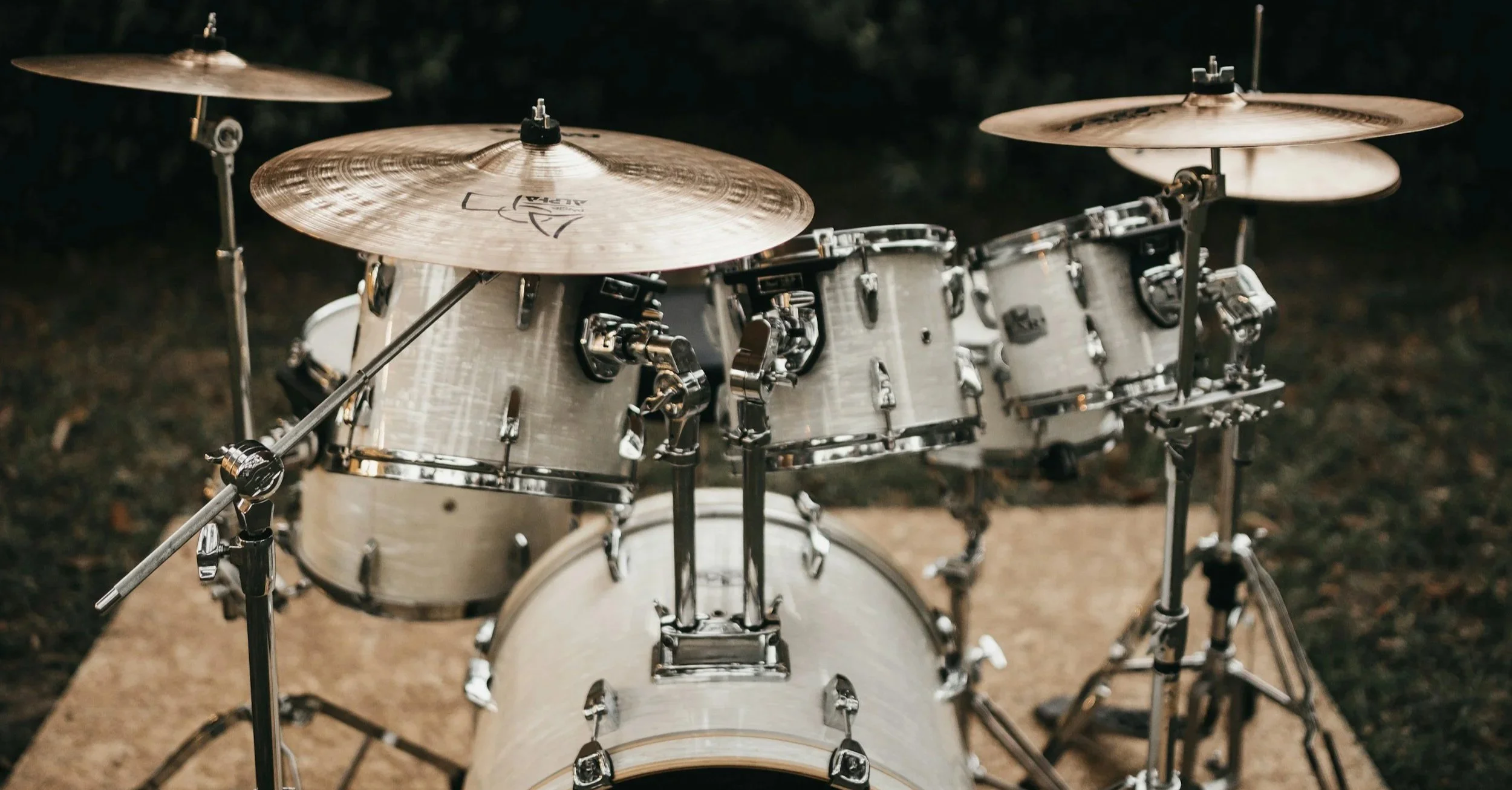
Start by Looking for a Name-Brand Drumset
If you are trying to get a good drumset without spending a fortune, one of the first places I recommend looking is Facebook Marketplace or another local used-equipment marketplace. Used drumsets can be an excellent value, particularly when you know what brands and equipment to look for.
I generally recommend looking for a recognizable drumset manufacturer rather than simply buying the cheapest new drumset you can find. Companies such as Yamaha, Pearl, Tama, Mapex, Gretsch, Ludwig, Sonor, and DW have all produced drumsets at different price points, including models that are perfectly appropriate for beginning drummers. You do not need to buy the most expensive drumset a company makes. A good, used, name-brand kit can be a much better starting point.
When you are looking through listings, try to find a package that includes as much of the complete setup as possible. Ideally, you want the drums to come with the snare drum, cymbals, cymbal stands, hi-hat stand, snare stand, bass drum pedal, and drum throne. Buying a drumset that already includes these pieces can save you a substantial amount of money because purchasing every piece of hardware individually adds up surprisingly quickly.
Pay Attention to the Cymbals
The cymbals deserve some extra attention when you are shopping for a used drumset. It is fairly common to find a name-brand drumset that has been paired with very inexpensive beginner cymbals. That does not necessarily mean you should pass on the entire drumset, but you should know what you are actually buying.
Some of the major cymbal brands to look for include Zildjian, Sabian, Paiste, and Meinl. There are plenty of other good cymbal manufacturers, but these are some of the names you are likely to encounter frequently when shopping for used equipment.
If you find a used Yamaha drumset, for example, that includes a set of Zildjian or Sabian cymbals, along with the necessary stands, pedals, and throne, that is a very different package from a Yamaha kit that comes with a set of extremely inexpensive cymbals and almost no hardware.
Look at the entire package rather than just the number of drums. A smaller, quality setup with useful equipment can be a much better purchase than a huge kit with poor-quality accessories.
Do You Need a 4-Piece or 5-Piece Drumset?
No, you do not need a giant drumset to get started. A 4-piece or 5-piece drumset is typically an excellent starting point for a beginner.
A traditional 4-piece setup usually consists of a bass drum, snare drum, one rack tom, and one floor tom. A 5-piece setup generally adds a second rack tom. Either configuration gives you everything you need to learn the fundamentals of drumset playing.
There is nothing wrong with eventually adding more toms or cymbals. As you become a more experienced drummer, you may discover that you want another crash cymbal, a second floor tom, additional effects cymbals, or an entirely different setup. That is part of the fun of playing drums. You can gradually customize the instrument around the way you play.
When you are just starting, though, you do not need anything bigger than a 4-piece or 5-piece kit. Learn how to use what you have first. You may be surprised by how much music you can make with a relatively small drumset.
Should You Buy a Starter Drumset or a Better Drumset?
There are two reasonable ways to approach your first drumset purchase. The first is to buy an affordable starter kit from a reputable manufacturer and gradually upgrade it as you become a better drummer. The second is to buy a higher-quality drumset from the beginning and keep it for many years.
There is nothing wrong with starting small. If you are not sure how seriously you or your child will pursue drumming, a reasonably priced starter kit can make a lot of sense. You can replace individual components over time as you figure out what you actually want.
On the other hand, if you already know that you are going to stick with drumming, buying a better-quality drumset from the beginning can also be a smart approach. You can continue upgrading the components around it instead of eventually replacing the entire instrument.
One thing to keep in mind is that the drum shells themselves are often the part of the drumset that stays with you the longest. Drumheads will eventually be replaced. Sticks will break or wear out. Cymbals may eventually be upgraded or replaced. Pedals and other hardware can also change as your playing develops.
The shells, however, can stay with you for many years if you take care of them. So if you are buying a quality drumset that you hope to keep for a long time, find a shell finish you actually like. There is nothing wrong with considering the color or finish when you are shopping. You may be looking at those drums for a very long time.
What Should You Look for When Buying a Used Drumset?
When you find a used drumset that looks promising, take some time to inspect it before buying it. You do not have to be a drum-building expert to spot some obvious problems.
Look over the drum shells and make sure there are no major cracks, serious damage, or obvious structural problems. Check the tom mounts and other hardware to make sure everything actually works. Move the stands and pedals and make sure they are functional rather than simply assuming that everything pictured in the listing works properly.
Take a close look at the cymbals as well. Small scratches and normal signs of use are not necessarily a problem, but you should pay particular attention to cracks around the edges and around the bell. A damaged cymbal may need to be replaced, which can change the value of the package considerably.
The drumheads are another thing to inspect. Used drumheads can certainly be played, but if they are severely worn, dented, or damaged, you should consider the cost of replacing them when deciding whether the drumset is a good deal.
Finally, make sure you know exactly what is included. A drumset sitting in someone's basement can look complete in a photograph while actually being missing the bass drum pedal, hi-hat stand, snare stand, or other important pieces. Those individual items can get expensive quickly, so make sure you are comparing complete packages rather than just comparing the price of the drums.
How to Set Up Your First Drumset
Once you get your first drumset home, you have another important task: figuring out where everything should go. There is no single "correct" drumset setup because every drummer is a little different. Your height, body proportions, playing style, and the type of music you play can all affect how you eventually arrange your drums.
There are, however, some basic setup principles that make a very good starting point for a new drummer.
Start With the Snare, Bass Drum Pedal, and Hi-Hat Pedal
I recommend starting your setup with the snare drum stand, bass drum pedal, and hi-hat pedal. These three pieces establish the basic position of your hands and feet, so it makes sense to get them comfortable before you start positioning everything else.
Set the snare drum in a comfortable position in front of you. Then place the bass drum pedal on one side and the hi-hat pedal on the other. Your feet should feel natural and relaxed. You should not have to squeeze your legs together, stretch your legs unusually far apart, or twist your body to reach either pedal.
Once those three pieces feel comfortable, build the rest of the drumset around them. This approach is much better than simply putting the drums wherever they happen to fit and then trying to position your body around the equipment.
Keep the Rack Toms Close Together
If your drumset has two mounted rack toms, keep them relatively close together. You generally do not need a large gap between the drums.
The closer positioning makes it easier to move between the toms during fills and helps keep the overall drumset compact. You want your movement between drums to feel natural rather than requiring your arms to make large, unnecessary movements.
This is also one reason I recommend starting with a smaller drumset. A compact setup encourages efficient movement and gives you a good foundation for learning how to navigate the instrument.
Keep Your Rack Toms Relatively Low and Flat
Another common beginner setup issue is having the rack toms positioned at an extreme angle. You will sometimes see drumsets where the toms appear to be pointing almost directly at the drummer. That is usually unnecessary.
Try keeping your rack toms relatively low and fairly flat, while still giving yourself enough clearance for the rims and your sticks. The exact angle will depend on the drummer, but you generally want the drums positioned so that you can play them comfortably without having to make exaggerated movements with your wrists or arms.
Your drumset should work with your body. You should not have to contort your body to accommodate the drumset.
Keep the Ride Cymbal Relatively Low
Your ride cymbal should generally be low enough that you can comfortably reach the playing surface and the bell. You do not need to place the ride cymbal several feet above the drumset.
Keeping the ride relatively low can make your playing more efficient because you have less distance to travel between your drums and cymbal. You should be able to move naturally from the snare or toms to the ride without having to make a large lifting motion with your arm.
The bell is particularly important. Make sure you can comfortably reach it because you will eventually find yourself using it for accents, patterns, and different musical textures.
Your Crash Cymbal Can Be a Little Higher
Your crash cymbal can generally sit somewhat higher than your ride cymbal. You want enough room to strike the cymbal comfortably without hitting the rim of another drum or cymbal.
Again, there is no reason to put the crash extremely high. If you have to reach way above your head every time you play a crash, it is probably higher than it needs to be. Start with a comfortable position and adjust it as you develop your own playing style.
The goal is not to make your drumset look impressive. The goal is to make it comfortable and efficient to play.
Customize Your Drumset Setup
Once you have some experience playing, you can start experimenting with different drumset configurations. There is no rule saying that every drummer has to position their drums and cymbals exactly the same way.
For example, you can experiment with what I call "kickflipping" your bass drum, which is a way of changing the orientation and positioning of the bass drum to create a more customized setup.
READ HOW TO “KICKFLIP” YOUR BASS DRUM HERE!
This is the kind of thing that becomes more interesting once you have spent some time playing a standard setup. Start with a comfortable, conventional arrangement, learn how your body interacts with the instrument, and then experiment from there.
OR CHECK OUT THE OTHER GREAT DRUMSET ACCESSORIES I RECOMMEND HERE!
Buy a Nice New Pair of Drumsticks
If you are buying a used drumset, one of the easiest things you can do to make the experience feel like your own is to buy a new pair of drumsticks. Drumsticks are relatively inexpensive compared with the rest of your equipment, and there is no reason to start learning with a pair that has already been heavily used.
You can learn more about choosing drumsticks here:
LEARN ABOUT MY RECOMMENDED DRUMSTICKS FOR EVERY APPLICATION HERE!
When selecting a pair, look for sticks that match well. There is an old-school trick you can use when comparing sticks. Hold each stick and very lightly tap it against the side of your head to listen to its pitch. You are looking for a pair that sounds similar.
The higher the pitch, generally speaking, the denser the wood. This does not mean that the highest-pitched sticks are automatically the "best" sticks for every drummer, since stick choice ultimately comes down to feel, size, weight, wood type, and personal preference. However, matching the pitch of the two sticks can be a useful way to find a pair that feels and sounds consistent.
And remember, very lightly tap the sticks. You are listening for pitch, not trying to give yourself a percussion solo on the side of your head.
Check the Drumheads
If you buy a used drumset, take a close look at the drumheads before you start playing regularly. Drumheads are a normal wear item, so it is not unusual for a used drumset to need a fresh set.
If the heads are heavily worn, dented, deeply scratched, or otherwise damaged, replacing them can make a dramatic difference in the sound and feel of the drumset. Two of the biggest names in drumheads are Remo and Evans, and both companies make a wide variety of heads for different drums and playing styles.
Fortunately, replacing a drumhead is not nearly as complicated as it may initially seem. You mainly need to know the diameter of the drum and which side of the drum the head belongs on.
The top head is generally called the batter head. This is the head you actually strike with your sticks. The bottom head is called the resonant head, and on a snare drum you will often hear it called the snare-side head.
So, for example, if you have a 12-inch rack tom with a damaged top head, you would be looking for a 12-inch batter head. If you are replacing the bottom head of that drum, you would need a 12-inch resonant head.
If you are unsure of the size, measure the drum before ordering. Do not assume that every drum in your kit uses the same size head.
Remember That Drumheads, Cymbals, and Sticks Will Eventually Change
One of the most useful things to understand when buying your first drumset is that you do not have to think of the entire kit as a permanent, all-or-nothing purchase.
Your drum shells can potentially stay with you for decades. Other parts of the setup are much more likely to change.
Drumsticks break or wear out. Drumheads eventually need to be replaced. Cymbals can be upgraded as your ears develop and you learn what sounds you like. Pedals and other hardware can also be replaced as your playing progresses.
This is why buying a quality drumset from a reputable manufacturer can make sense even if you do not have the budget to buy every premium component immediately. You can start with a solid foundation and improve the rest of the setup over time.
You do not need to build your dream drumset on day one.
Learn How to Tune Your Drumset
Once your drumset is assembled and the drumheads are in reasonable condition, one of the best things you can learn is how to tune the drums.
Drum tuning can seem mysterious when you are first starting out. There are multiple tension rods around each drum, and small adjustments can change the sound. Fortunately, you do not need to become a professional drum technician to get a good sound from your kit.
Learning some basic drum tuning techniques will help you get much more out of the equipment you already own. A properly tuned drumset can sound dramatically better than the exact same drumset with poorly tuned heads.
Before assuming that you need to buy new drums because your kit does not sound good, make sure you have learned how to properly tune the drums you already have.
Here are some useful drum tuning videos to get started:
And if all else fails (and you live near Syracuse, NY), I offer an in-home drum kit setup and tuning service!
Your First Drumset Does Not Need to Be Complicated
If you are buying your first drumset, do not get distracted by enormous kits with six toms, a dozen cymbals, and enough hardware to fill the back of a van.
Start with the fundamentals.
Look for a reputable brand, especially when shopping used. Try to find a complete package that includes the drums, cymbals, stands, pedals, and throne. Pay attention to the brands of the cymbals as well. A 4-piece or 5-piece drumset is more than enough to get started, and you can always add to it later.
Once you get the drumset home, spend some time setting it up correctly. Start with your snare, bass drum pedal, and hi-hat pedal. Keep your rack toms close together and relatively flat. Keep your ride cymbal low enough that you can comfortably reach the bell, and position your crash cymbal where you can play it naturally.
Buy a fresh pair of sticks, inspect the drumheads, and learn how to tune the drums.
Most importantly, remember that you do not need a giant drumset to become a good drummer. A well-chosen 4-piece or 5-piece drumset can take you a very long way.
And once you eventually outgrow it, you can always add to it.
Now, when you’re ready to drum on your new kit, check out my warmups and exercises on this handy Drumr App!
DOWNLOAD THE DRUMR PRACTICE APP HERE!
OR SEE HOW TO ADD A DIGITAL MUSIC SCREEN TO YOUR NEW DRUMSET!
About the Author
Patrick Blakley is a percussion educator, author, adjudicator, and entrepreneur specializing in marching percussion and drumline education. He is the creator of DrumPacket.com, DrumlineWarmups.com, DrumAudit.com, DrumsetGrooves.com, and SyracuseDrums.com. His educational materials and performance audio edits through CompetitiveMusic.com are used by hundreds of schools and programs across the United States and beyond. He is the author of Quadratics: The Tenor Drum Equation, The Field Percussion User Manual, and other instructional music books. Read more about him by clicking here!
