
Kickflip Bass Drum Setup: A Smarter Drum Kit Setup for Better Ergonomics and Tom Placement
What Is the Kickflip Bass Drum Setup?
Most drummers use a standard bass drum setup with the batter head facing the player and rack toms mounted on top of the bass drum. This traditional drum kit configuration has been the standard for decades and works perfectly well for many players. However, the conventional arrangement also creates a limitation that is easy to overlook. The physical position of the bass drum determines where the rack toms can be placed, and that can force the toms to sit higher or at steeper angles than a player might prefer.
For some drummers, particularly those who prefer a lower playing position, the traditional setup can make it difficult to position the rack toms exactly where their hands naturally want to go. A tom mounted directly above the bass drum has to clear the top of the drum, which can raise the playing surface. The angle of the toms is then often adjusted to compensate. While this may be perfectly comfortable for one player, another drummer may find that the arrangement creates awkward stick angles, excessive wrist movement, or unnecessary tension in the arms and shoulders.
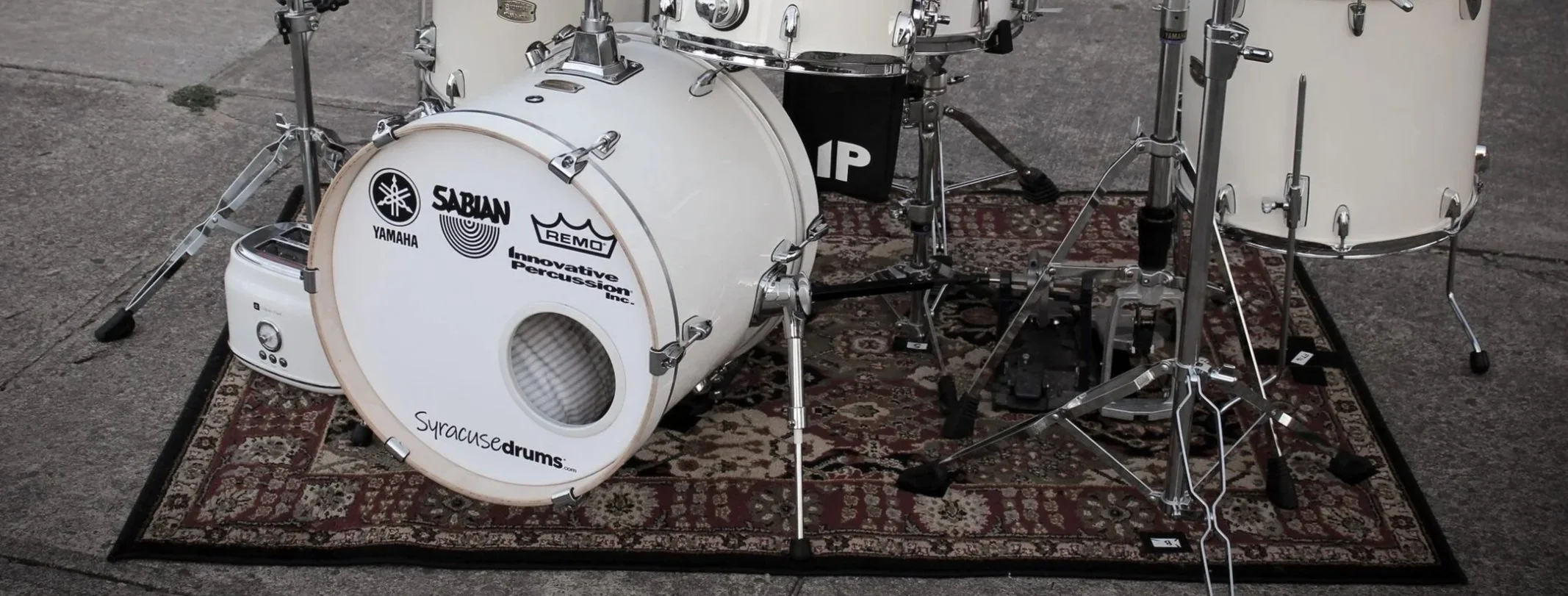
The Kickflip Bass Drum Setup is an alternative drum kit configuration designed to address this issue by changing the orientation of the bass drum. Instead of treating the bass drum as the fixed center of the entire setup, the Kickflip approach changes its position so the rest of the kit can be arranged around the drummer's natural playing position. The result is a different relationship between the bass drum, rack toms, snare drum, and cymbals.
The basic concept is relatively simple. The batter and resonant sides of the bass drum are swapped. The side of the bass drum that normally faces the player is positioned away from the player, while the opposite side becomes the side facing the drummer. The bass drum spurs are then repositioned toward the player so the drum can be properly supported in its new orientation.
A small riser is placed under the front of the bass drum to provide additional support and allow the height and stability of the drum to be controlled. The riser is an important part of the setup because changing the orientation of the bass drum also changes how the drum sits on the floor. The goal is to create a stable platform while maintaining a practical playing height for the rest of the kit.
The main advantage of this configuration is the additional freedom it can provide when positioning the rack toms. Rather than being limited by the physical height and geometry of a traditionally oriented bass drum, the drummer has more flexibility to experiment with lower tom positions and shallower angles. This can make it easier to create a setup where the sticks approach the playing surfaces from a more natural position.
The Kickflip setup is not intended to suggest that a traditional drum kit configuration is inherently wrong. Drum setup is highly personal, and players have different body proportions, techniques, musical styles, and preferences. What works for one drummer may not work for another. The purpose of the Kickflip concept is to provide another option for players who want to experiment with ergonomics and tom placement.
Ultimately, the Kickflip Bass Drum Setup changes the bass drum from being a limitation on tom placement into another variable that can be adjusted as part of the overall ergonomic design of the kit. By changing the orientation of the bass drum, repositioning the spurs, and using a small riser for support, the drummer can create a setup with different tom heights, angles, and playing positions. For players who have struggled to find a comfortable arrangement using a conventional setup, this alternative configuration is worth experimenting with.
How the Kickflip Drum Setup Works
In the Kickflip configuration, the bass drum is physically rotated so that the resonant side faces forward and the batter side faces the drummer. This changes the position of the bass drum hardware and, more importantly, changes where the tom mounting hardware sits in relation to the player. The tom mount effectively moves closer to the drummer, creating additional freedom when positioning the rack toms.
There is one important step that should not be overlooked. The drum heads need to be swapped after the bass drum is rotated. You obviously do not want to be playing the bass drum with the manufacturer's logo head facing you. The goal is to preserve the normal playing surfaces while taking advantage of the different physical orientation of the shell and mounting hardware. Once the heads are swapped, the bass drum can function normally while the tom mounting position remains optimized for the Kickflip configuration.
The change in bass drum orientation can have a noticeable effect on rack tom placement. With a conventional setup, the rack toms are positioned above the bass drum and often need to clear the top of the shell. Depending on the size of the bass drum and the drummer's preferred setup, this can result in toms being positioned higher than necessary. Rotating the bass drum changes that relationship and can allow the rack toms to sit lower and flatter.
Lowering the rack toms can reduce the amount of vertical movement required to reach them. Instead of lifting the sticks toward elevated playing surfaces, the drummer can position the toms closer to the same general playing plane as the snare drum. A flatter tom angle can also change the way the stick approaches the head, giving the player another option for finding a comfortable and efficient stroke path.
The result is a drum kit configuration that can reduce reach distance and allow the player to keep the hands closer to a natural playing position. This is particularly relevant when playing passages that move frequently between the snare and rack toms. When those surfaces are positioned closer together, the physical movement required to travel between them can be reduced.
The ergonomic benefits can also become more noticeable during longer playing sessions. A setup that requires repeated reaching or exaggerated arm movement may become increasingly uncomfortable as a rehearsal or performance continues. By allowing the toms to be positioned lower and closer to the player, the Kickflip configuration provides another way to approach drum kit ergonomics and potentially reduce unnecessary movement.
The important point is that the Kickflip setup is not about simply turning the bass drum around. The entire configuration works together. The bass drum is rotated, the heads are swapped, the spurs are repositioned, and a riser can be used to provide the necessary support. Once those changes are made, the toms can be positioned according to the player's preferred height and angle.
Like any ergonomic drum setup, the ideal position will vary from drummer to drummer. Body size, arm length, playing technique, drum sizes, and personal preference all affect what feels natural. The Kickflip configuration simply provides another option for achieving a lower, flatter, and potentially more efficient rack tom arrangement.
Benefits of the Kickflip Bass Drum Setup
Better Tom Placement and Drum Kit Ergonomics
Lower and flatter tom positioning can change the way the sticks approach the playing surface. When rack toms are positioned high or at steep angles, the drummer may need to adjust the hands and wrists to accommodate the playing surface. A lower tom position can bring the playing surface closer to the natural path of the hands, while a shallower angle can provide a more consistent surface for the sticks to contact.
This can be particularly noticeable when moving between the snare drum and rack toms. If the toms are positioned significantly higher than the snare, the drummer has to make a larger vertical movement every time the hands travel from one surface to another. Lowering the toms reduces that difference and can make the transition between drums feel more direct. For passages that involve frequent movement around the kit, eliminating unnecessary motion can make the overall technique feel more efficient.
Tom angle also affects the relationship between the stick and the drumhead. A very steep tom angle can require the drummer to change the orientation of the hands and forearms to maintain a comfortable stroke. A flatter position can allow the player to experiment with a more natural stick path while maintaining the desired sound and articulation. The ideal angle will vary depending on the player and the size and depth of the tom, but extreme angles are not necessary simply because they are common on traditional drum setups.
The ergonomic goal is to reduce unnecessary movement rather than restrict movement. A good drum kit setup should allow the drummer to reach every playing surface comfortably while keeping the hands, arms, and shoulders relatively relaxed. When the equipment is positioned efficiently, the player can concentrate more of their attention on rhythm, dynamics, sound quality, and musical expression instead of constantly compensating for the physical arrangement of the kit.
Lower tom placement can also help eliminate awkward reaches. Instead of stretching upward or outward to reach a rack tom, the drummer can position the drum within a more compact playing area. This can be especially useful for players who spend long periods practicing or performing and want to minimize repetitive movements that are not contributing to the music.
The result is not necessarily a single "correct" tom position. Drum kit ergonomics are highly individual, and the best setup depends on the drummer's body, technique, equipment, and musical requirements. The advantage of the Kickflip configuration is that it gives the player more freedom to experiment with those variables. By reducing excessive tom height and steep angles, the setup can support a more natural playing position and help the drummer develop clean, efficient, and consistent technique.
Improved Bass Drum Stability
The Kickflip setup creates multiple contact points with the floor, including the bass drum spurs, bass drum pedal, and front riser. These contact points work together to support the bass drum and help keep it from shifting during normal playing. A bass drum that moves slightly during a performance can be frustrating because the pedal position changes relative to the drummer, which can affect consistency and comfort.
The front riser is particularly useful because it provides an additional point of support under the front portion of the bass drum. The riser can help control the position and height of the drum while the spurs and pedal provide additional points of contact closer to the player. Instead of relying on the bass drum shell and its spurs alone, the configuration creates a more stable platform for the entire setup.
Stability becomes increasingly important when the drum is being played with a strong or highly active bass drum technique. Every stroke applies force to the drum and pedal, and that force can cause a poorly supported bass drum to move across the floor. A stable setup allows the drummer to concentrate on playing rather than repeatedly repositioning the bass drum during rehearsal or performance.
The Kickflip configuration also gives the drummer more control over the angle of the bass drum. Because the front of the drum is supported by a separate riser, the player can experiment with the height and orientation of the shell instead of treating the standard bass drum position as fixed. Small changes in the angle can affect how the drum sits in relation to the player's legs, pedal, and other components of the kit.
Bass drum angle can also influence how the instrument interacts with the room. The bass drum produces a significant amount of low-frequency energy, and the way the drum is positioned relative to the floor, surrounding surfaces, and audience can affect how the instrument is perceived. There is no single angle that will produce the best sound in every situation because room acoustics, flooring, microphone placement, drum construction, tuning, and playing technique all play a role.
For that reason, the ability to adjust the bass drum position is best viewed as another setup variable rather than a guaranteed sound improvement. In a practice room, studio, stage, or other performance environment, you can experiment with the orientation and support of the drum to find a position that feels comfortable and produces the response you want.
The combination of stability, adjustable positioning, and improved control over the bass drum's physical orientation is one of the practical benefits of the Kickflip approach. The goal is to create a bass drum platform that stays where you put it while giving you greater freedom to position the rest of the kit around your own playing technique.
More Natural Playing Feel
Raising the front of the bass drum slightly can change the physical relationship between the bass drum, pedal, and drummer. Even a relatively small change in the angle of the shell can affect how the pedal sits and how the drummer's foot interacts with the pedal. Because bass drum technique depends heavily on consistent foot position and movement, these small setup adjustments can change the overall feel of the instrument.
The change can also affect leg positioning around the center of the drum kit. In a traditional setup, the bass drum, snare drum, and hi-hat all occupy a relatively compact area in front of the drummer. Depending on the size of the drums and the player's body proportions, this can sometimes create a crowded feeling around the knees and lower legs. The drummer may have to work around the physical placement of the instruments rather than simply positioning them where the body naturally wants to move.
By changing the bass drum orientation and slightly raising its front, the Kickflip configuration can create additional flexibility in how the snare and hi-hat are positioned relative to the bass drum pedal. This can make it easier to find a comfortable position for the legs and feet while keeping the primary playing surfaces within a compact reach.
The goal is not to create a single correct angle or pedal position. Every drummer has different proportions, technique, and equipment, so the ideal setup will vary. A shorter player may prefer a different arrangement than a taller player, and a drummer using heel-down bass drum technique may have different requirements from someone using a heel-up approach. The advantage of the Kickflip configuration is that it gives the drummer more variables to adjust.
When the bass drum, snare, and hi-hat are positioned efficiently, the result can be a more open and comfortable drum kit layout. The legs have room to move without unnecessary interference, while the hands can remain close to the playing surfaces. This can be especially useful during longer practice sessions and performances where small ergonomic issues can become more noticeable over time.
A comfortable setup should ultimately allow the drummer to move naturally. The equipment should accommodate the player's technique rather than forcing the player to constantly compensate for the position of the drums. Raising the front of the bass drum is one adjustment within the larger Kickflip setup that can help achieve that goal.
Who Should Try the Kickflip Drum Setup?
The Kickflip Bass Drum Setup can be useful for a variety of drummers, particularly players who are interested in improving the ergonomics of their drum kit. Because the configuration changes the relationship between the bass drum and rack toms, it gives players another option for creating a more compact and comfortable playing position.
This drum kit setup is particularly worth considering for:
Drummers focused on ergonomics and reducing unnecessary strain. A more compact arrangement can reduce excessive reaching and allow the player to position the drums around their natural range of motion. The goal is not to eliminate movement, but to make the movement required to play the kit as efficient as possible.
Players who feel their rack toms are too high or steeply angled. Traditional bass drum configurations can limit how low rack toms can be positioned. The Kickflip approach changes that relationship and can allow players to experiment with lower tom heights and flatter angles.
Students developing proper drumset technique. Beginning drummers are still learning how their body should interact with the instrument. Starting with an ergonomic setup can give students an opportunity to learn efficient movement, comfortable stick angles, and appropriate positioning from the beginning rather than developing habits around an uncomfortable kit.
Smaller players who need a more compact reach. Younger or shorter drummers may have a harder time comfortably reaching elevated rack toms and other playing surfaces. Lowering the toms and bringing them closer to the snare can create a playing area that is easier to navigate.
Drummers who enjoy experimenting with drum hardware setups. There is no rule that says every drum kit has to be configured exactly the same way. Players who enjoy modifying their hardware, experimenting with tom placement, or searching for a more personalized setup may find the Kickflip configuration particularly interesting.
The setup can also be useful for experienced drummers who have never been completely satisfied with a traditional configuration. Sometimes a small change in the physical arrangement of a kit can reveal that a player has been adapting their technique to the equipment rather than the equipment being adapted to them.
As with any alternative drum setup, the Kickflip configuration is not automatically better for every drummer. The best arrangement depends on the individual player, drum sizes, hardware, technique, and musical requirements. The value of the system is that it provides another option. If your current setup feels crowded, your rack toms feel too high, or you simply want to experiment with a different approach to drum kit ergonomics, the Kickflip setup gives you a practical starting point.
How to Set Up the Kickflip Bass Drum Configuration
Step 1: Remove heads and hoops
Take off both bass drum heads and hoops.
Step 2: Flip the bass drum orientation
Swap the batter and resonant heads. Reinstall the hoops accordingly.
Step 3: Reposition the spurs
Swap the bass drum spurs so they’re on the opposite sides than before. Adjust for stability.
Step 4: Add a front riser
Place a small riser under the new front side of the bass drum. Adjust height for balance and angle.
Step 5: Reinstall tom mount
Mount the rack toms in the new position. They should sit lower and flatter than in a standard drum setup.
Step 6: Fine-tune the drum kit setup
Adjust spur angle, riser height, and tom positioning. Test everything with the bass drum pedal attached to ensure stability during play.
Final Thoughts on the Kickflip Drum Kit Setup
The Kickflip Bass Drum Setup is a practical alternative drum kit configuration that rethinks the traditional relationship between the bass drum, rack toms, snare, and hi-hat. By changing the orientation of the bass drum and adjusting the way the instrument is supported, the setup gives drummers more flexibility when positioning the rest of the kit. The primary goals are improved ergonomics, more flexible tom placement, and a playing environment that feels natural and comfortable.
The concept is based on a simple idea: the traditional drum kit configuration is not the only possible configuration. Most drummers learn to set up a kit with the bass drum in a standard orientation and then position everything else around it. That approach works, but it can also create limitations when a player wants lower rack toms, flatter tom angles, or a more compact playing area. Reversing the bass drum changes those constraints and gives the drummer another way to approach the physical layout of the instrument.
One of the biggest advantages of the Kickflip configuration is that it can be fully reversible. The setup does not require permanent modifications to the bass drum shell or other major components of the kit. The bass drum can be returned to its conventional orientation if desired, making the Kickflip approach something you can experiment with without permanently changing your equipment.
The setup also allows you to make adjustments based on your own body and playing technique. Rack tom height, tom angle, bass drum angle, snare position, and hi-hat placement can all be adjusted to create a configuration that works for the individual drummer. This is important because there is no universal drum kit setup that is ergonomically perfect for everyone. A configuration that feels excellent to one player may feel completely wrong to another.
If your current drum setup feels restrictive, crowded, or uncomfortable, the Kickflip approach may be worth experimenting with. Players who feel that their rack toms are too high, their toms are angled too steeply, or their legs feel crowded around the bass drum may find that changing the bass drum orientation opens up new setup possibilities.
Ultimately, the Kickflip Bass Drum Setup is about giving drummers another option. Instead of accepting the standard arrangement simply because it is familiar, you can experiment with the physical layout of the kit and determine what works best for your playing. A drum kit should support your technique, movement, and musical goals. If changing the orientation of one component allows the rest of the kit to fit you better, that can be a worthwhile adjustment.
About the Author
Patrick Blakley is a percussion educator, author, adjudicator, and entrepreneur specializing in marching percussion and drumline education. He is the creator of DrumPacket.com, DrumlineWarmups.com, DrumAudit.com, DrumsetGrooves.com, and SyracuseDrums.com. His educational materials and performance audio edits through CompetitiveMusic.com are used by hundreds of schools and programs across the United States and beyond. He is the author of Quadratics: The Tenor Drum Equation, The Field Percussion User Manual, and other instructional music books. Read more about him by clicking here!
