The Bicentennial Quarter
Congrats on leveling up! You are now a level 3 drummer!
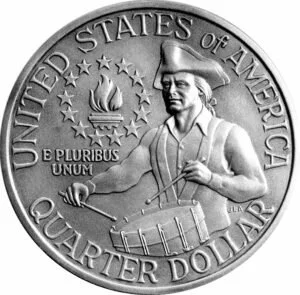
When I was a very young drummer, my mentors and fellow student drummers would give each other these bicentennial quarters when someone did a good job. Today, I still use these unique quarters to let student drummers know that they’re succeeding on their path to mastering the drums! I’d also like to take this opportunity to thank you for learning drums with me in my studio, so this coin is also a small way for me to say thanks as well.
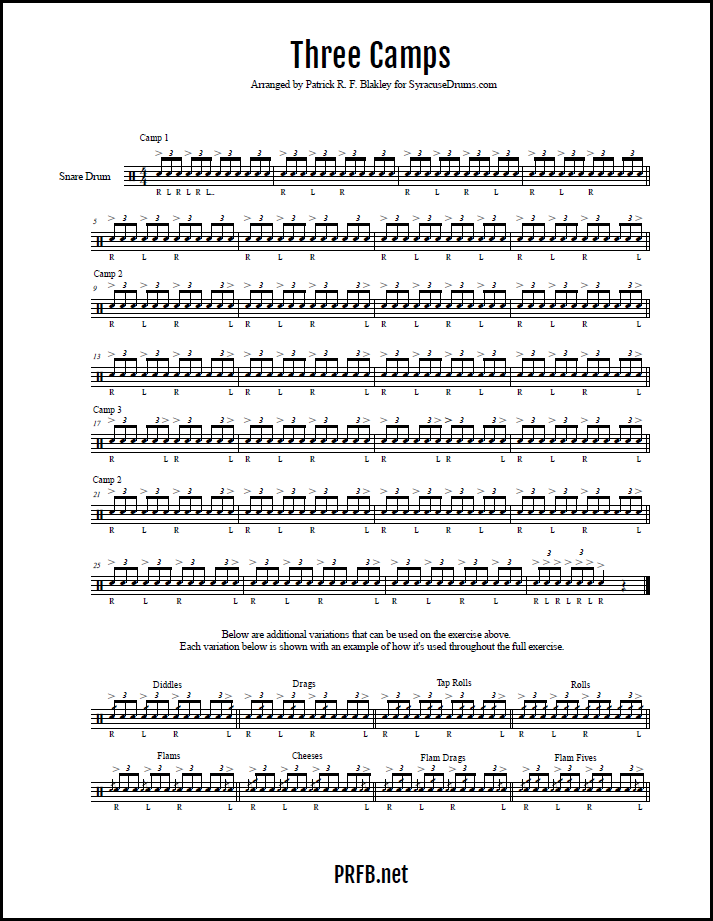
I have a degree in history, and I absolutely love it when the drumming and historical worlds collide! Take a minute and read about some interesting drum history that surrounds the free drum exercise below: During the Revolutionary War, the United States Army utilized drummers to quite literally beat the war drums. Drum and fife corps were common among army camps, and these same types of groups would lay the foundation for what we know today as drum and bugle corps. An exercise developed over two hundred years ago was played by these drummers and is called Three Camps, and has been passed down from generation to generation of drummers. This exercise is still very popular to this day! This exercise highlights three distinct rhythm passages, known as the camps, which are played one after another as though they were responses between army camps. The exercise utilizes triplets, which break each beat down into three subdivisions, which is something that we’ll learn in level three. So it’s quite fitting that when you’ve made it to drum level three, we learn an exercise called three camps that’s composed of three note groupings!
Your bicentennial coin, also known as a drummer boy, is currently only worth about face value (twenty-five cents), but if you display it for yourself and use it to help motivate yourself to practice, it can be worth a whole lot more!
Remember, drumming is more than just a hobby; it’s a long tradition passed down from drummer to drummer over centuries in this country, and millennia across the globe! Welcome to the society of drummers! Please read more about the American Revolution’s drummers in this excellent visual article by the American Revolution Experience, and another great traditional article by the Stonybrook Undergraduate History Journal written by Alexander Bergeret.
You’re officially halfway to the top of the six official drumming levels. But remember that each level gets exponentially more challenging, which means each subsequent level will take more and more time and dedication. Let this coin serve as a small symbol of the foundation of your progress so far. Everything we learn from here will build upon the basics of technique and the rhythm fundamentals that you’ve already established. From here, we’ll start to push your physical and mental limits in order to grow your chops and vocabulary, as well as how you think about drum music in general. At this point, you should definitely feel like a drummer because there is no doubt you are one, and the things you’ve already learned will stick with you for your entire life!
Three Camps – Exclusive Exercise for SyracuseDrums.com Students!
Click the image below to download this exercise as a PDF file
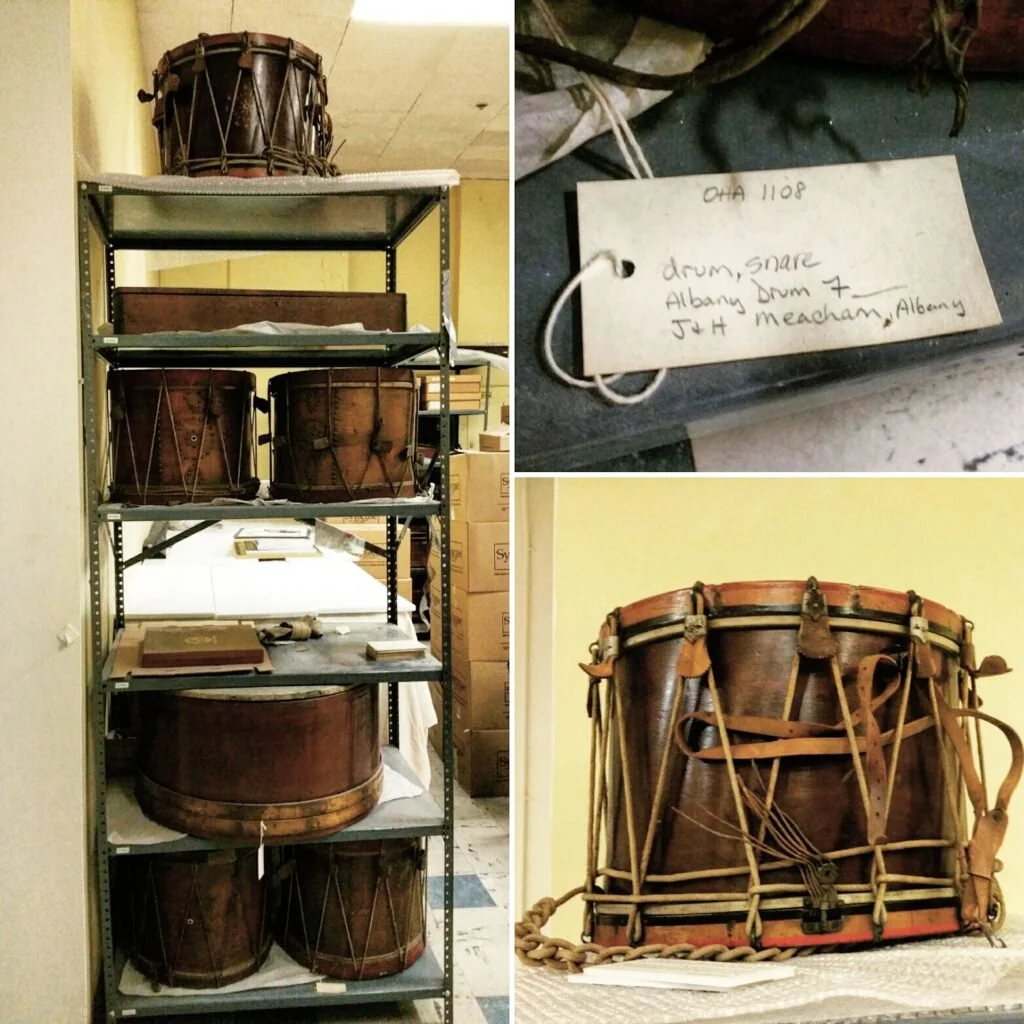
Field Drums at the Onondaga Historical Association Museum
While volunteering at the Onondaga Historical Association Museum in downtown Syracuse, I had the chance to explore the upstairs storage area, and stumbled across something pretty incredible. Tucked away among the shelves was a collection of six old rope-tension field drums, likely dating back to the Civil War era.
This small archive includes five field snare drums and one large field bass drum, all of them featuring the classic rope-tension construction used in military bands of the 1800s. These drums aren’t your modern parade instruments. They’re time capsules! Worn, handcrafted, and still holding the spirit of the era they came from.
One snare in particular caught my attention: OHA #1108, made in Albany by J&H Meacham, a known supplier of drums to Civil War regiments. Another, OHA #8392, comes from Ludwig in Chicago, which likely places it a bit later historically, possibly early 20th century. Four of the five snares feature tack patterns around the shells, a decorative and traditional touch. One of them stands out even more with a painted design that looks like it could have graced a battlefield or marched in a Union camp.
Also preserved in this group is a pair of old drumsticks (OHA #1535.2.1-.2), adding a personal touch to the collection. It’s one thing to see a drum, but to see the sticks that may have struck it 150 years ago? That hits different.
While these instruments aren’t currently on display, they’re a reminder of the musical traditions that marched beside soldiers through mud, fields, and history. They’re not just instruments, they’re storytellers with stretched calfskin and rope for a voice.